Pay with NFC: contactless and secure
NFC technology makes payments faster, simpler, safer, and more hygienic.

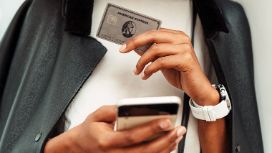
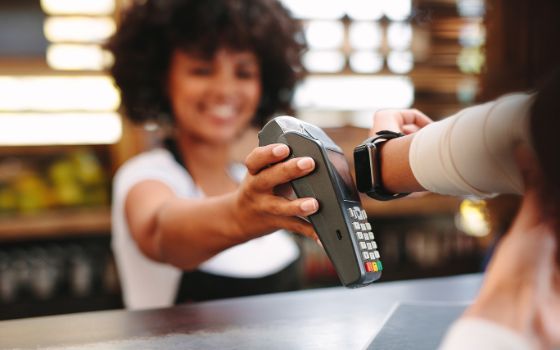
Eine stilbewusste Person bezahlt mit ihrer Smartwatch kontaktlos am Lesegerät und zeigt, wie modern mobile Zahlungen mit einer hinterlegten American Express Karte funktionieren. Die Szene steht für einen flexiblen Premium-Lifestyle zwischen Reise, Kulinarik und urbanem Alltag, in dem NFC schnell, sicher und komfortabel ist. Für das Magazin AMEXperience veranschaulicht das Bild den konkreten Mehrwert smarter Finanzlösungen für Leserinnen und Leser, die Effizienz, Sicherheit und exklusive Erlebnisse schätzen.

Everything you need to know at a glance
NFC stands for “Near Field Communication” and enables contactless payments over very short distances—using a credit card, smartphone, smartwatch, or other wearables. The technology makes the payment process particularly fast, convenient, and hygienic, as simply holding the device up to the reader is sufficient.
NFC payments are considered secure because they only work at a distance of a few centimeters, are transmitted in encrypted form, and in Switzerland are usually limited to CHF 80 or CHF 100 without a PIN. With an NFC-enabled credit card, such as one from American Express, you can make everyday payments easily and securely.
What NFC Means: The Definition
NFC stands for Near Field Communication. It is an international transmission standard for exchanging data, which you are familiar with from contactless payments. If you want to pay the bill in a store or restaurant with a credit card, you don’t necessarily have to insert it into the reader—just holding it close is enough.
By now, almost all readers are equipped for near-field communication, recognizable by the symbol with four curved radio waves. The word “contactless” is often displayed as well.
Technically, NFC has its origins in RFID technology, i.e., contactless radio communication over very short distances. The payment terminal receives a signal from your card when it is in close proximity. Modern bank or credit cards have a small computer chip built in that enables this communication.
Alternatively, NFC payments are also possible with other devices, such as smartphones, smartwatches, or smart rings. NFC was introduced in the early 2000s. This technology became widespread in everyday life starting in the 2010s.
Interesting fact: Of course, all American Express credit cards also support NFC payments, allowing you to pay securely and easily worldwide.
Benefits of paying via NFC: convenient and secure
NFC technology has quickly become established in everyday payment processes. This is primarily due to its simple and fast data transmission. Holding the device up to the card reader is convenient and hygienic, and the payment process is completed in seconds.
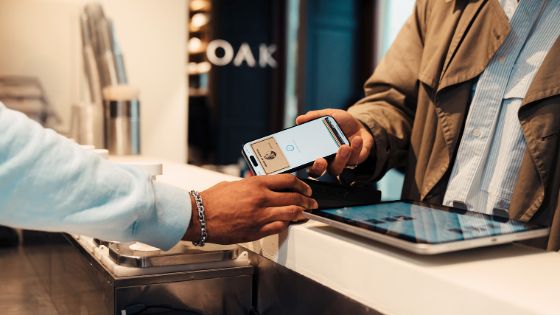
Modern devices, such as Android or Apple smartphones, smartwatches, or other wearables, come equipped with the necessary chip as standard. Some banks offer their own apps where NFC payments can be enabled. Additionally, payment services like Google Pay, Samsung Pay, or Apple Pay include this feature.

Security in NFC Payments
NFC payments are very secure. The technology typically works only at a distance of a few centimeters, which means the risk of unauthorized access is lower than with wireless technologies that have a longer range. The data transfer rate is also low compared to other wireless standards, further limiting the potential for misuse.
In addition, industry-standard encryption methods are used when transmitting account and payment data. To enhance security in the event of credit card theft, NFC payments in Switzerland are limited to amounts up to CHF 80 without requiring a PIN; with some providers, the limit is up to CHF 100.
Interesting fact: However, this limit is not fixed; it can vary depending on the card, provider, terminal, and payment method.
The right card for your lifestyle
Shop more easily with American Express thanks to NFC
Thanks to NFC technology, you can pay quickly, conveniently, and hygienically with your American Express Card or a mobile device. Simply hold your card, smartphone, or smartwatch up to the terminal until you hear a beep. For amounts up to CHF 80, this works without entering your PIN; for amounts above that, your PIN is required for security reasons.
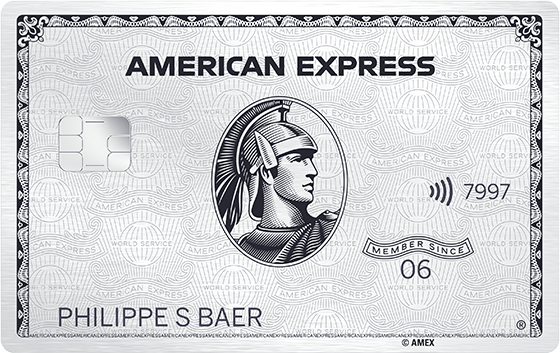
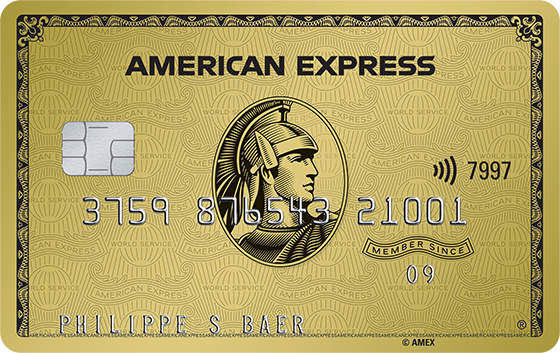
And that’s by no means the only advantage of an American Express credit card: Cards like the Gold Card or the Platinum Card also offer you a comprehensive insurance package and are widely accepted in Switzerland. Plus, American Express SafeKey® protects you from fraud during online shopping.
Frequently asked questions and answers
Almost all credit cards today have built-in NFC chips. When you hold your card up to an NFC reader while paying in a store, the money is transferred contactlessly via data transmission in a matter of seconds.
For contactless payments with NFC, you need either a bank card, a smartphone, or a wearable device with an NFC chip and the appropriate app. Once the feature is activated, simply hold your card or mobile device up to an NFC reader in the store.
NFC payment transactions are considered very secure, as the technology only works at a distance of a few centimeters, thereby reducing the risk of unauthorized access compared to wireless technologies with a longer range.