Germany: 10 sights from north to south
The Elphi in the north, the Partnach Gorge in the south: impressive sights in Germany.
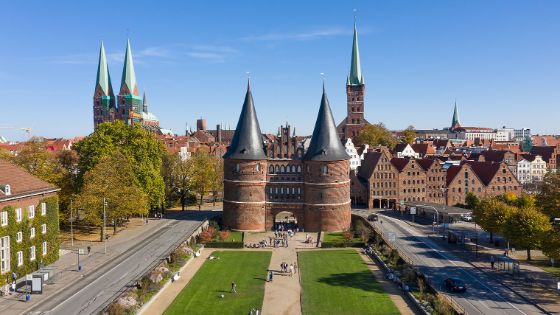

Sommerlicht auf dem Holstentor in Lübeck: Das spätgotische Doppeltor der Backsteingotik mit Kegeldächern rahmt die Altstadt, während Leute durch die Parkanlage flanieren. Das Motiv erzählt von Reisen, die American Express mit komfortablem Bezahlen, Lounge-Zugang, Mietwagen- und Hotelvorteilen für Platinum Card Mitglieder veredelt.

Everything you need to know at a glance
Germany has a fascinating variety of sights from north to south. From historic city gates such as the Holstentor in Lübeck to modern architecture such as the Elbphilharmonie in Hamburg to natural wonders such as the Externsteine and the Partnachklamm.
In addition to the classics, you can also discover lesser-known highlights such as the Rakotz Bridge or the Blautopf. We present ten of the most beautiful sights in Germany that combine culture, history, and nature and are perfect for inspiring short trips or longer discovery tours.
Holstentor Lübeck: Landmark of the city
The Holstentor stands at the western edge of Lübeck's old town. It was built in the mid-15th century and is one of the most important examples of Brick Gothic architecture. The two massive round towers with their characteristic conical roofs flank the central structure and dominate the skyline of the Hanseatic city.
Over the centuries, the building sank deeper and deeper into the marshy ground and began to tilt slightly to the west. This tilt gives the building a special character.
The gilded Latin inscription "concordia domi foris pax" (in English: "harmony within, peace without") is a reminder of Lübeck's former days as an important trading city. Today, the Holstentor houses a museum on the city's history and has been a UNESCO World Heritage Site since 1987.
Must-do: View the gate from both sides to experience the different architectural designs. While the field side exudes defensiveness with thick walls and few windows, the city side features richer ornamentation.
Elbphilharmonie Hamburg: Sound architecture at the harbor
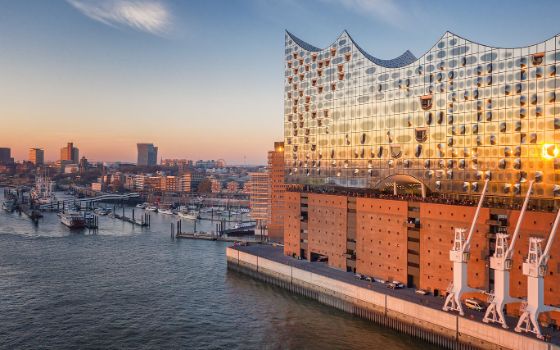
Where Kaiserspeicher A once stood, the glass silhouette of the Elbphilharmonie now rises. The new building by Swiss architects Herzog & de Meuron rests on historic brick foundations and elegantly connects Speicherstadt and HafenCity.
The heart of this beautiful German landmark is the public plaza at a height of 37 meters, which wraps around the building like a ring and opens up views of the Elbe, the docks, and the city.
Inside, the Great Hall follows the vineyard principle: the tiers surround the stage, creating proximity between the audience and the orchestra. Yasuhisa Toyota ensured the precise acoustics. The restaurants on the plaza and in "The Westin" offer North German cuisine and tastings.

Externsteine in the Teutoburg Forest: mystical rock formations
Five striking sandstone rocks rise up to 40 meters high and form a natural monument of particular appeal. The Externsteine in Horn-Bad Meinberg, North Rhine-Westphalia, are an important cultural monument.
Stairs carved into the rocks lead to a small grotto with a relief depicting the Descent from the Cross. The Externsteine are among Germany's most famous sights and delight hikers and culture lovers alike.
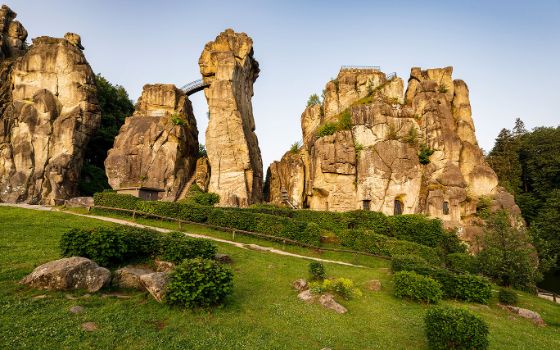

Dragon Gorge near Eisenach: hiking between narrow rock faces
A narrow path leads through the Dragon Gorge in the Thuringian Forest between moss-covered rocks. In places, the walls are only one meter apart, but up to ten meters high. The hiking trail runs from Mariental over wooden footbridges directly across the stream, which has carved its way deep into the sandstone.
The nature reserve is just under three kilometers long. Ferns and mosses thrive in the humid microclimate, and even on hot days it remains pleasantly cool. The gorge, which is open all year round, connects with the Märchenwald Thüringen (Thuringian Fairy Tale Forest) to form a charming circular hike.
Must-do: hike the entire gorge in both directions to experience the different perspectives. The high trail above the gorge offers impressive views of the Werra Valley.

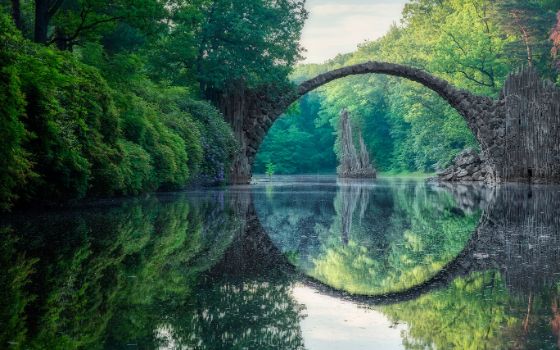
Rakotz Bridge in Kromlau Rhododendron Park: perfect reflection
Between Berlin and Dresden, in Upper Lusatia, lies a fairytale architectural gem. In Gablenz, south of Cottbus, the Rakotz Bridge in Kromlau Park forms a perfect stone circle with its reflection. Legend has it that the devil himself helped build it.
In fact, the structure was built in the mid-19th century as part of the romantic park design. Basalt columns from Lusatia and various other rocks were artfully arranged. However, the listed bridge is not accessible. But the surrounding park is enchanting, especially when the rhododendrons bloom in early summer.

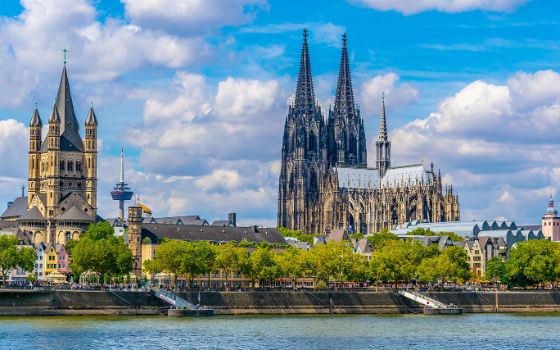
Cologne Cathedral: Gothic cathedral on the Rhine
Cologne's landmark rises up on the banks of the Rhine with its two striking towers. Cologne Cathedral is one of Germany's most visited attractions and is a UNESCO World Heritage Site. Construction of the Gothic cathedral took more than 600 years, with the foundation stone being laid in the 13th century. The two towers rise 157 meters into the sky.
Inside, the cathedral houses important art treasures. The Shrine of the Three Kings is considered the largest golden reliquary in the Western world. One of the colorful stained-glass windows was designed by the artist Gerhard Richter and provides a modern counterpoint to the medieval architecture.

Rothenburg ob der Tauber: medieval picture-book town
The completely preserved city wall encloses an old town that has hardly changed since the Middle Ages. Rothenburg ob der Tauber in Franconia is considered the epitome of German half-timbered romanticism. Narrow streets lead to pretty squares, colorful houses line up next to each other, and wrought-iron tavern signs swing in the wind.
The Plönlein is a small square and the town's landmark. Every evening, the night watchman leads visitors through the dark alleys and tells stories of times gone by. During the Christmas season, the town is transformed into a living Advent calendar, with the Reiterlesmarkt being particularly beautiful.
Must-do: Walk along the city wall and enjoy this view of Rothenburg. The covered battlement is largely accessible and offers beautiful views of towers, roofs, and alleys.
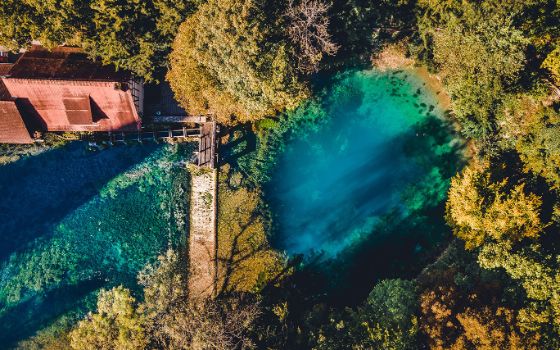
Blautopf in Blaubeuren: Source of intense color
A small lake glows in such an intense blue that it seems unreal. The Blautopf near Ulm is the second strongest karst spring in Germany and feeds the Blau, a tributary of the Danube. The unusual color is caused by light scattering on fine limestone particles in the water.
A vast cave system extends beneath the 21-meter-deep sinkhole. Several kilometers have already been explored during dives, but the system still holds many secrets. The historic hammer mill on the shore and Blaubeuren Monastery complement your visit, creating a harmonious ensemble of nature and culture.

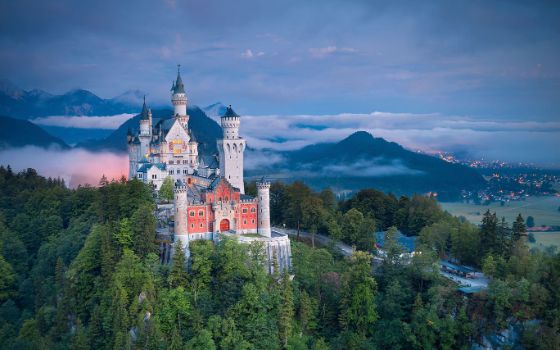
Neuschwanstein Castle: Fairytale castle in the Alps
Germany's world-famous landmark rises up on a rugged rock above the Pöllat Gorge: Neuschwanstein Castle was built in 1869 on the orders of King Ludwig II and was intended as a romantic retreat to revive the world of medieval knights.
The white limestone walls, slender towers, and magnificent backdrop of the Ammergau Alps make the castle the epitome of German castle romance. The Byzantine-style throne room and the singers' hall, modeled after Wartburg Castle, testify to the splendor of the interior. Ludwig himself lived in the castle for only 172 days.
Today, Neuschwanstein is one of the most visited castles in Europe, attracting over a million visitors annually, and served as inspiration for Disney's fairy-tale castles. The building has been a UNESCO World Heritage Site since 2025.

Partnach Gorge near Garmisch-Partenkirchen: thunderous power in the rock
Between vertical rock faces, the Partnach river plunges into the valley over cascades and rapids. The approximately 700-meter-long gorge south of Garmisch-Partenkirchen is one of the most impressive natural spectacles in the Bavarian Alps. The secured path leads through tunnels blasted into the rock and over footbridges.
The walls rise up to 80 meters high, spray flies, and the roar of the water fills the narrow gorge. On hot days, it is pleasantly cool here, although a visit is appealing in any season. Access to the natural monument is possible all year round.
Good to know: In winter, freezing spray creates a fairytale ice landscape. The gorge is then illuminated by spotlights and appears particularly dramatic. Warm clothing and non-slip shoes are essential during this time.
Which card will accompany you on your trips in Germany?
Germany and its sights: Bucket list of unforgettable places
The ten sights in Germany presented here, from north to south, showcase the remarkable diversity of the country. Between the Baltic Sea coast and the edge of the Alps, each region has developed its own highlights and character, shaped by the landscape, history, and people who live there.
Some of these places are among Germany's most famous sights, while others are insider tips away from the crowds. It is precisely this mixture that makes Germany such an attractive travel destination. Take your time and discover the lesser-known corners of the country.
An American Express credit card makes your travel experience even more comfortable. Depending on the type of card you choose, you can expect a wide range of travel benefits, from extensive insurance benefits to advantageous car rental conditions.
Frequently asked questions and answers
The most visited sights in Germany include Cologne Cathedral, Neuschwanstein Castle, the Brandenburg Gate, the Frauenkirche in Dresden, and the Port of Hamburg. Away from these classics, it is worth taking a look at less frequented alternatives, which are often no less impressive.
Less well-known treasures include the Rakotz Bridge in Kromlau Park, the Dragon Gorge near Eisenach, and the Blue Spring in Blaubeuren. Smaller half-timbered towns such as Goslar or the car-free island of Hiddensee also offer authentic experiences far away from mass tourism.
Two ideas: Hamburg delights with the Elbphilharmonie, maritime flair, and a lively cultural scene. It's ideal for anyone who loves architecture and harbor flair. Rothenburg ob der Tauber, on the other hand, enchants with its medieval old town and romantic half-timbered houses.